Pine Plantation Thinning and Stand Maintenance
Why should I thin my pine plantation?
A pine plantation can be closely compared to your average garden items -- when you start out, you may plant the seeds of carrots, for instance, and eagerly anticipate the growth and harvest! But when they come up you may find that they are too thick, and if you wish to get sizable, fast growing carrots you will have to thin them so that each plant gets the sunlight, moisture and nutrients it needs. Thinning a plantation of pine is done for very similar reasons. As a stand develops, it may become too densely stocked, and if a stand is left in this condition, the trees will not grow at the rate of their potential, and may suffer from drought stress and/or become susceptible to insects or other health issues.
When should I conduct a thinning?
When and how often to thin a pine stand depends on multiple factors such as the original spacing, current health of the stand, stand density, etc. A typical pine plantation gets thinned for the first time at about age 25. Before thinning begins, a forester surveys or “cruises” the stand of trees and determines the Basal area – a measurement to calculate tree density within a stand. The ideal Basal area for a pine plantation can vary depending on landowner goals and site conditions, but a good target Basal area following a thinning will be about 2/3 of what previously existed in most cases. For plantations that have been well managed in the past this will generally be between 80 and 100 basal area.
If trees in a pine stand spend too much time crowded together, growth rings can be much shorter and then when they are finally thinned there will be a quick, dramatic increase in the size of growth rings that causes twisting and warping of the final wood products. When utilizing trees for wood production, mills desire trees that have had a history of even growth during the tree’s life cycle. For this reason pine plantations should be thinned every 7-10 years to promote even growth, as well as to maintain a healthy growing environment.
Regular, well timed thinning operations lead to high quality wood products and healthy trees.

Pine Plantation Before Thinning
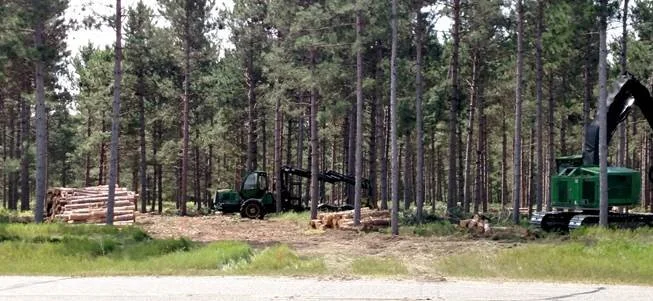
Pine Plantation After Thinning
Written by Stan Grossman.